
9v9 soccer formations
Paste your squad, mark who's coming, and see the line-up, each player's job and fair minutes. Try it on the sample.
A free account saves your squad. Match timing runs on this device only and does not save minutes. Save your squad
Set up a 9v9 formation on the board
Your 9v9 squad
10 of 12 coming · 60-min gameSampleSquad
12 players- 1Ava SmithGK
- 2Ben OrtizDF
- 3Chloe ParkDF
- 4Diego RuizDF
- 5Ella ChenMF
- 6Finn ReyesMF
- 7Grace KimFW
- 8Hugo LaneMF
- 9Isla BrownFW
- 10Jack LeeMF
- 11Kai MillsFW
- 12Lily WongMF
Tap a player to mark who's coming
Drag a player anywhere. Drop near a spot to snap, on a player to swap, on the bench to sub off.
Playing time plan
Tap a cell: On → Bench → Out. Hold to pick a position. Minutes add up on the right.
On the pitchBenchOut (not coming / injured)📌 pinned · Auto-fill leaves itColumn ▾ = shown on the board
9v9 team sheet · 3-2-3
| # | Player | Position | Minutes |
|---|---|---|---|
| 1 | Ava Smith | Goalkeeper | 60 min |
| 2 | Ben Ortiz | Left back | 54 min |
| 3 | Chloe Park | Center back | 54 min |
| 12 | Lily Wong | Right back | 54 min |
| 5 | Ella Chen | Holding midfielder | 53 min |
| 8 | Hugo Lane | Central midfielder | 53 min |
| 7 | Grace Kim | Left winger | 53 min |
| 9 | Isla Brown | Striker | 53 min |
| 11 | Kai Mills | Right winger | 53 min |
| 10 | Jack Lee | Bench | 53 min |
Pitch Formations, a free formation board for youth coaches, lets you set up a 9v9 lineup on the page. A 9v9 team has nine players on the field, including the goalkeeper. The shapes on this page leave the goalkeeper out of the formation numbers.
U.S. Soccer's U11–U12 example is 1-3-2-3, or 3-2-3 without the goalkeeper. U.S. Soccer says its shapes are examples and other formations may be used. U.S. Soccer, U11–U12 9v9 formation, checked 2026-11-05
- U.S. Soccer's U11–U12 9v9 example is 1-3-2-3, written 3-2-3 without the goalkeeper. Formation page
- U.S. Soccer lists 9v9 as the largest game format for U11–U12; smaller formats may also be played. Game formats
- The U.S. Soccer U11–U12 guide includes games from 1v1 to 9v9 and calls for players to experience all positions. Age-group guide
- England Football calls 9v9 the largest format for U12–U13 from the 2026–27 season. England Football Learning
Save a 9v9 lineup
Set the lineup on the board, then save it to your team or make a share link.
Try each part on the sample
Every card opens the real thing in the panel above, already filled with the 12-player sample.
Watch it move
Three frames: with the ball, without it, and winning it back.
Short-handed auto-shape
Mark who is out; the panel picks 3-3-1, 2-3-1 or 2-2-1.
- 1Ava S.60′ · 100%Enough time
- 2Ben O.54′ · 90%Enough time
- 3Chloe P.54′ · 90%Enough time
- 12Lily W.54′ · 90%Enough time
Everyone is at or above 50%.
Minutes split
10 coming, 9 on the field: the keeper plays all 60 minutes, everyone else 53–54.
Spot the gap
One player is out of place. Can you find them? Three rounds.
Print team sheet
Starters, bench and minutes on one page for the clipboard.
Like it with your own players? Your squad, shape and minutes stay in the app. Save your squad
9v9 line-up and roles
Tap a position on the pitch or a card to see what that player does and which kid it suits.
Goalkeeper & defenders
Midfield
Forward
Tap a position on the pitch or a card.
3-2-3 or 3-3-2: what changes?
No 9v9 formation is required. U.S. Soccer gives one example for U11–U12, the 3-2-3, and does not rank the others. Pages about 9v9 often list more shapes than that. The table starts with the U.S. Soccer example, then the 3-3-2, then three more shapes to compare. U.S. Soccer, formation page, checked 2026-11-05
U.S. Soccer's example is 3-2-3. Our default for new teams is 3-3-2; both are below.
- What the rows show
- Three defenders, two midfielders and three forwards
- A coaching use
- Use the wide forwards to give the team options on both sides; the two midfielders can stagger
- Visible trade-off
- Two midfielders cover the space between three defenders and three forwards
- What the rows show
- Three defenders, three midfielders and two forwards
- A coaching use
- Use the extra central row to connect the back line to a pair up front
- Visible trade-off
- Two forwards have to share the width and connect with the midfield
| Shape | What the rows show | A coaching use | Visible trade-off |
|---|---|---|---|
| 3-1-3-1 | Three defenders, one midfielder, three advanced midfielders and one forward | Compare when you want three players across the next line | One midfielder sits between the back line and three advanced midfielders |
| 2-4-2 | Two defenders, four midfielders and two forwards | Compare when you want four players across midfield | Two defenders cover the space behind the midfield four |
| 4-3-1 | Four defenders, three midfielders and one forward | Compare when you want a four-player back line | One forward starts ahead of the midfield |
| 2-3-3 | Two defenders, three midfielders and three forwards | Compare when you want a front three and a compact back pair | The back two need nearby cover |
The U.S. Soccer 3-2-3 uses a goalkeeper, one center back and two outside backs, two staggered midfielders, and three forwards: one central and two wide. U.S. Soccer, checked 2026-11-05
Sources: U.S. Soccer 9v9 formation · U.S. Soccer game formats · checked 2026-11-05
9v9 rules for U11–U12
Checked 2026-11-05. "Not stated" means we found nothing on that source's public pages.
| U.S. Soccer, U11–U12 | England Football, U12–U13 (from 2026–27) | |
|---|---|---|
| Players on the field | 9, goalkeeper included (9v9 is the largest format for U11–U12) | 9 |
| Field | Not stated | Recommended 73 × 46 m, minimum 64 × 37 m |
| Goals | Not stated | 16 × 7 ft |
| Ball | Not stated | Size 4 |
| Game length | Not stated | Up to 60 minutes |
| Playing time | Not stated | Best practice: every player plays at least 50% of the game |
| Offside | Applies at this age (U.S. Soccer has no offside before U9) | Introduced at this stage |
| Heading | U11: no heading in practice or games. U12: no more than 30 minutes of heading practice a week, and no more than 15–20 headers per player a week | Allowed |
Coming from 7v7? The step to 9v9 is on 7v7 soccer formations.
Sources: U.S. Soccer game formats · U.S. Soccer, U11–U12 age-group guide · U.S. Soccer, Five things to know about small-sided standards (2017) · England Football Learning, 9v9 games · checked 2026-11-05
How to play the 3-2-3
U.S. Soccer's example starts with a goalkeeper, three defenders, two staggered midfielders and three forwards, one central and two wide. U.S. Soccer, checked 2026-11-05
Role cards (coaching prompts for the drawn shape, not U.S. Soccer position rules)
- Goalkeeper: Stay behind the defenders, talk to them and start with a safe pass when your team has the ball.
- Center back: Stay central, talk to the outside backs and look for a safe pass into midfield.
- Outside back: Offer a wide passing option; join forward when a teammate can cover the space behind.
- Holding midfielder: One of the two midfielders takes the deeper role. Stay connected to the defenders, scan before receiving and offer a pass out of pressure.
- Higher midfielder: The other midfielder stands a little higher. Link the holding midfielder with the three forwards and look for the next forward pass.
- Wide forward (winger): Hold width to offer a forward pass; when the ball is on the other side, move toward the far post or a central passing lane.
- Central forward: Give the team a forward target and connect play with the wide forwards.
With the ball
- Spread the three forwards to give the player on the ball a forward option on either side.
- Stagger the midfield pair so the first pass is not hidden behind a teammate.
- Let an outside back move forward when a midfielder can cover the space behind.
Without the ball
- Recover behind the ball before pressing as a group.
- Keep the two midfielders at different depths so one can protect the space in front of the defense.
- The far-side winger tucks in enough to help the team stay connected.
A fit to consider: This shape gives the team three forward starting spots, including two wide positions. It asks the midfield pair to cover the central connection between the lines.
Watch for: If both midfielders move forward together, the space in front of the back three can open. Agree which player holds that space as the ball moves.
Try these sideline cues: “Find the wide lane.” · “One holds, one goes.” · “Can you see the next pass?”
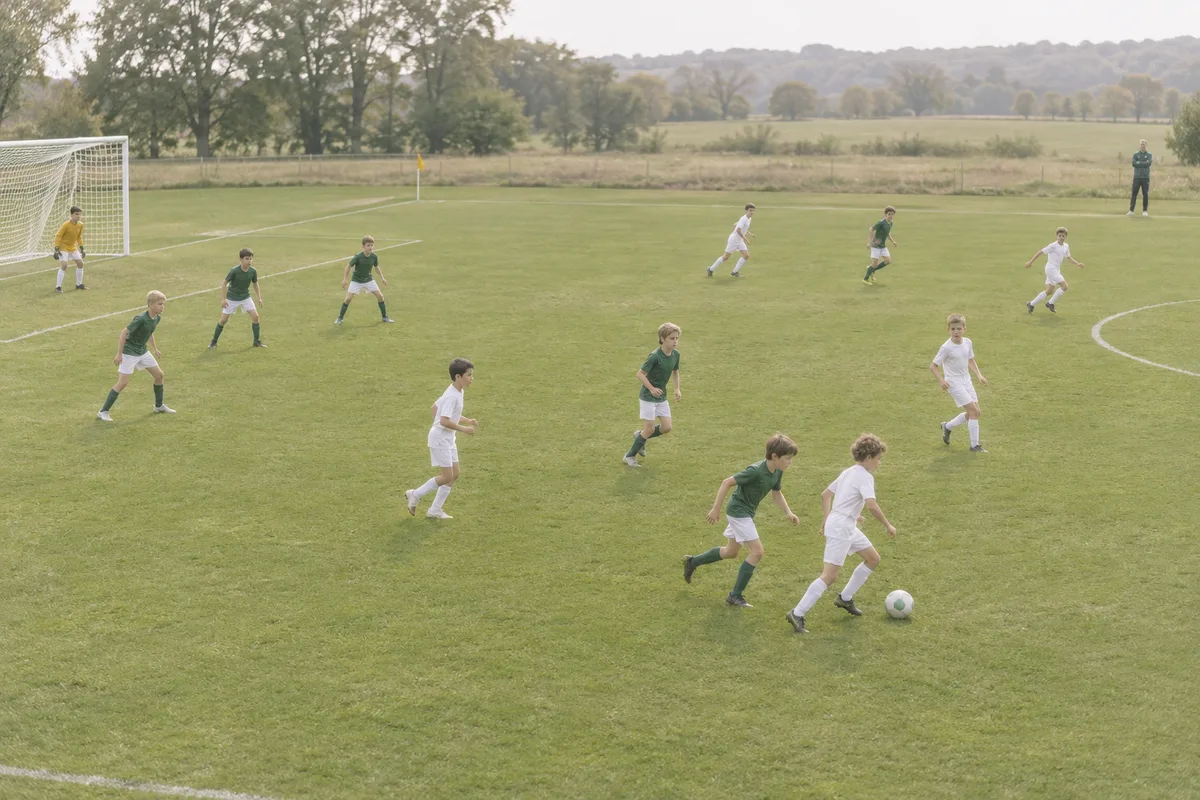
Watch: the 3-2-3 in 14 minutes
It walks through where the 3-2-3 players stand, how the team builds up from the back and how it defends. The coach's advice is his view, not a U.S. Soccer rule.
Watch on YouTubeHow to play the 3-3-2
The 3-3-2 is a coaching option on this page, not a U.S. Soccer example. Its rows show three defenders, three midfielders and two forwards. Use the middle row to connect the back line to the front pair.
Role cards
- Goalkeeper: Stay behind the defenders, talk to them and start with a safe pass when your team has the ball.
- Center back: Organize the central space and find a midfielder who can face forward.
- Outside back: Give the team a wide outlet and check who covers if you move up.
- Wide midfielders (two): Give the team width, then recover beside the central midfielder when defending.
- Central (holding) midfielder: Stay in front of the defenders, offer a safe pass, connect both sides and check your shoulder before receiving.
- Striker pair: One forward checks toward the ball while the other stays higher or moves into the space ahead. Swap jobs when the first pass is made.
With the ball
- Start with the midfield three spread across the field.
- Let one forward check short while the partner stays beyond the ball.
- Use a wide midfielder as an outlet when the center is crowded.
Without the ball
- Bring the midfield line behind the ball before closing down.
- Keep one forward available for an outlet and the other close enough to support.
- Protect the middle first; guide play toward a side together.
A fit to consider: The front pair can support one another, and a three-player midfield offers another passing line through the center.
Watch for: If the wide midfielders stay high, the outside backs may be left with a large area to defend. Agree on a recovery cue before the game.
Try these sideline cues: “One checks, one stretches.” · “Midfield, stay connected.” · “Show them outside.”
Fewer than nine showed up
- Moves
- Moves
U.S. Soccer's PDI minimum to start a 9v9 game is six players. Follow your competition's rules.
Plan fair minutes in a 60-minute game

These examples divide outfield minutes across the outfield players on the roster. A goalkeeper who plays the full game is counted separately.
Minutes by roster size
| Roster | Keeper all gameeach outfield player | Keeper half gameaverage across roster |
|---|---|---|
| 10 players | 53 min | 54 min |
| 11 players | 48 min | 49 min |
| 12 players | 43 min | 45 min |
| 13 players | 40 min | 41 min |
| 14 players | 36 min | 38 min |
| 15 players | 34 min | 36 min |
Examples only; check your league rules. Plan fair minutes with your team roster.
See five ways to grow into 11v11
9v9 formations
3-2-3
Add a defender and midfielder to reach 4-3-3.
3-3-2
A balanced midfield can grow toward 4-4-2.
3-1-3-1
A central connector can grow toward 4-2-3-1.
2-4-2
A wide midfield four can grow toward a 4-4-2 diamond.
Common ways to play 9v9
Four game plans. Each one loads its shape on the panel so you can put your own players in it.
- Pass
- Moves
Build from the back · 3-2-3
- The goalkeeper rolls it to a back, not a long kick.
- The holding midfielder shows for the next pass.
- Wingers stay wide so the middle opens up.
See how a 3-2-3 shifts
- Pass
- Run
- Drops back
- Moves
Compare five 9v9 to 11v11 transitions
Watch: the 3-3-2 in under 3 minutes
It is a short look at the 3-3-2 for parents and new coaches, with the same channel's 3-2-3 video as a pair.
Watch on YouTubeHow to choose a 9v9 shape
Pick a shape your players can explain and adjust it after trying it in practice.
- Start with your players. Think about which players like to defend, connect passes or run into space; do not lock children into one role.
- Choose the first pass. Decide where you want a defender to look after winning the ball.
- Check the lines. Make sure players can see who holds, who supports and who moves forward.
- Plan the recovery. Agree how the wide players help when the other team has the ball.
- Try it in practice. Pause once to ask players which passing option they can see.
U.S. Soccer encourages U11–U12 players to experience all positions and to interchange roles during play. Use the shape as a starting picture, then let players learn more than one job. U.S. Soccer age-group guide, checked 2026-11-05
Spot the gap
Round 1 of 3. Tap the player who is out of place.
Which shape fits your team?
Answer a few questions and try the shape we suggest.
1 of 4
What does your team do best?
A 12–14 player roster and rotation planner
U.S. Soccer's U11–U12 guide says to provide opportunities for players to experience all positions. Print the blank planner below and fill it in by hand to keep track of those opportunities over your team's own schedule. U.S. Soccer age-group guide, checked 2026-11-05
Roster (write 12, 13 or 14 names; assign nine starting places and list the remaining players as available substitutes)
| # | Player | Starting role / first role to try | Other role to try | Tried? |
|---|---|---|---|---|
| 1–14 | ____________________ | ____________________ | ____________________ | □ |
Match planner
| Checkpoint | Goalkeeper | Back line | Midfield | Forward line | Players waiting / next to enter |
|---|---|---|---|---|---|
| Start | ______ | ______ / ______ / ______ | ______ / ______ | ______ / ______ / ______ | ______ |
| Next planned change | ______ | ______ / ______ / ______ | ______ / ______ | ______ / ______ / ______ | ______ |
| Later change | ______ | ______ / ______ / ______ | ______ / ______ | ______ / ______ / ______ | ______ |
After the game: Mark each role a player tried and note who is next for a different role.
Formation numbers and position jobs · Soccer positions explained: roles and cues
From 9v9 to 11v11: where do two players go?
U.S. Soccer's example moves from 1-3-2-3 at U11–U12 to 1-4-3-3 at U13+. The rows add one defender and one midfielder and keep the goalkeeper and three forwards. U.S. Soccer formations, checked 2026-11-05
In the pictures: The first pair under "Compare five 9v9 to 11v11 transitions" shows the 3-2-3 next to the 4-3-3, with the new defender and the new midfielder.
Keep the same questions as the team adjusts: who protects the center, who offers the next pass, and who supports the forward line? U.S. Soccer says formations change as players play different game formats.
9v9 soccer formation questions
What is the best formation for 9v9 soccer?
There is no required 9v9 formation. U.S. Soccer shows 1-3-2-3 for U11–U12 as its example and says other formations may be used. Choose a shape your players can understand and adjust it in practice. U.S. Soccer, checked 2026-11-05
What formation should a U11 or U12 team use for 9v9?
U.S. Soccer's U11–U12 example is 1-3-2-3, or 3-2-3 without the goalkeeper. U.S. Soccer, checked 2026-11-05
Is 3-2-3 or 3-3-2 better for 9v9?
Neither shape is officially ranked as better. The 3-2-3 puts three players in the forward row; the 3-3-2 puts two there and three in midfield. Pick based on the roles your players can handle and try it at practice.
How many players are on a 9v9 soccer team?
Nine players from each team are on the field, including the goalkeeper. U.S. Soccer lists 9v9 as the largest format for U11–U12 and says smaller formats can also be played. U.S. Soccer game formats, checked 2026-11-05
What does 1-3-2-3 mean in a 9v9 formation?
It counts the goalkeeper first, then three defenders, two midfielders and three forwards. Without the goalkeeper, the same rows are written 3-2-3. U.S. Soccer, checked 2026-11-05
Who plays where in a 9v9 3-2-3?
The U.S. Soccer 3-2-3 has a goalkeeper, one center back, two outside backs, two staggered midfielders and three forwards: one central and two wide. U.S. Soccer, checked 2026-11-05 See each position's job
How do I rotate players in 9v9?
Write down the role each player tried, then plan a different role for a later match. U.S. Soccer's U11–U12 guide says to provide opportunities to experience all positions. U.S. Soccer, checked 2026-11-05
How do I move from 9v9 to 11v11?
U.S. Soccer's examples change from 1-3-2-3 to 1-4-3-3: the rows add one defender and one midfielder. U.S. Soccer, checked 2026-11-05
Put your 9v9 lineup on the board
Switch between 3-2-3 and 3-3-2, set the player roles, and save the lineup to your team.
U.S. Soccer's U11–U12 guide says to provide opportunities for players to experience all positions. Print the blank planner below and fill it in by hand to keep track of those opportunities over your team's own schedule. U.S. Soccer age-group guide, checked 2026-11-05
Roster (write 12, 13 or 14 names; assign nine starting places and list the remaining players as available substitutes)
| # | Player | Starting role / first role to try | Other role to try | Tried? |
|---|---|---|---|---|
| 1–14 | ____________________ | ____________________ | ____________________ | □ |
Match planner
| Checkpoint | Goalkeeper | Back line | Midfield | Forward line | Players waiting / next to enter |
|---|---|---|---|---|---|
| Start | ______ | ______ / ______ / ______ | ______ / ______ | ______ / ______ / ______ | ______ |
| Next planned change | ______ | ______ / ______ / ______ | ______ / ______ | ______ / ______ / ______ | ______ |
| Later change | ______ | ______ / ______ / ______ | ______ / ______ | ______ / ______ / ______ | ______ |
After the game: Mark each role a player tried and note who is next for a different role.
Formation numbers and position jobs · Soccer positions explained: roles and cues